The intriguing report below was shared with me, and I thought it was worth passing along.
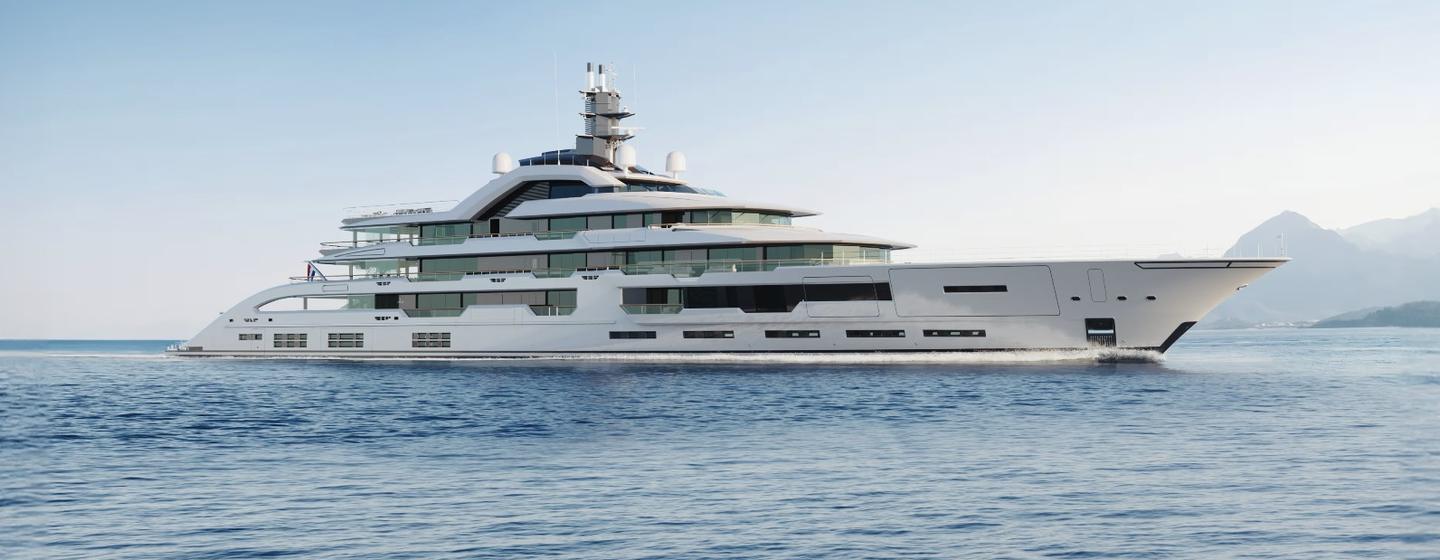
Project Tanzanite is a contract to build the largest Dutch-made 120-metre Amel/Damen superyacht, but the yacht’s ownership is a bit of a secret– which is not out of the ordinary.
Imperial Yachts was the broker commissioned to oversee the superyacht’s construction.
However, in 2022, following the outbreak of the Russia-Ukraine conflict, Imperial Yachts was sanctioned by the U.S. over allegations that the company was managing luxury assets for Kremlin-aligned Russian oligarchs.
The management of the project then shifted to a company founded by a former Imperial executive.
Nonetheless, there is no public evidence linking Project Tanzanite to any sanctions violations (or Damen’s separate criminal cases), but the timeline does raise questions about its ownership, sanctions, and due diligence.
Again, it’s an intriguing story.
–RdM
🔴 Project Tanzanite: The Superyacht, the Sanctioned Middleman and the Questions Hanging Over Damen

Damen Yachting calls Project Tanzanite a landmark of Dutch shipbuilding. But the 120-metre yacht’s history runs through a company sanctioned by the United States for servicing Russia’s elite – while Damen itself is now fighting separate criminal allegations involving corruption and Russian sanctions. None of this proves wrongdoing in relation to Tanzanite. It does, however, leave some obvious questions unanswered.
At 120 metres long and 6,083 gross tonnes, Project Tanzanite is difficult to hide.
Who ultimately owns it is another matter.
The yacht is the largest Amels Full Custom vessel ever constructed. Its hull was built at Damen’s Galati facility in Romania before being transferred to Vlissingen in the Netherlands. It was publicly launched as Project Tanzanite in September 2025, entered sea trials the following month and is scheduled for completion in 2026. Damen says more than 1,000 people across its own organisation and supply chain have worked on the project.
It is, by any measure, an extraordinary engineering project.
But Tanzanite also has an unusual history.
And that history has become more interesting as Damen Shipyards faces criminal proceedings in the Netherlands involving allegations of bribery, false documentation, money laundering and – in a separate investigation – alleged breaches of sanctions imposed on Russia following the invasion of Ukraine.
There is currently no public evidence that Project Tanzanite itself forms part of those criminal allegations.
That distinction matters.
But so does the timeline.
Before Tanzanite, there was Project Signature
The yacht first appeared publicly in September 2020 under another name: Project Signature.
At the time, the relationship behind the project was openly celebrated.
Amels and Damen Yachting would build it. Espen Øino would design it. And Monaco-based Imperial Yachts would represent the yacht’s owner and supervise construction.
Contemporary reporting described it as the ninth yacht project involving Imperial and Amels since 2009. Rose Damen said the project built on Amels’ “strong relationships” with Imperial and Øino.
The owner, however, was not identified.
That was not particularly unusual in the superyacht world. Privacy, offshore companies, family offices and owner representatives are standard components of an industry built around extremely wealthy clients.
Then Russia invaded Ukraine.
And Imperial Yachts became more than simply another discreet Monaco yacht company.
Washington sanctions Imperial
On 2 June 2022, the U.S. Treasury Department sanctioned Imperial Yachts and its CEO Evgeniy Kochman.
Treasury described Imperial as a yacht brokerage providing services including the design, ordering, charter and management of superyachts, and said the company provided yacht-related services to Russian elites, including people within President Vladimir Putin’s circle.
The U.S. government designated both Imperial and Kochman for operating in Russia’s marine sector. It also identified the superyacht Flying Fox as blocked property in which Imperial had an interest.
That designation does not mean that every Imperial client was sanctioned, nor that every vessel Imperial had previously represented became sanctioned property.
But it changed the compliance environment dramatically.
And Project Signature was an Imperial project.
So what happened next?
Imperial disappears – and Deeside appears
By June 2023, the same 120-metre yacht was nearing the next stage of construction.
Reporting at the time noted something significant: Imperial Yachts was no longer attached to the project. Instead, Deeside Maritime was representing the owner.
Deeside subsequently said it had been heavily involved with the yacht before its Romanian launch and would manage the construction and outfitting process on the client’s behalf.
There is another connection worth noting.
Deeside Maritime is run by Nick Flashman.
Before founding Deeside, Flashman had worked for Imperial Yachts. Reporting in 2022 identified him as the Imperial executive overseeing construction of major superyachts, including the Amadea. In discussing Imperial’s project-management arrangements, Flashman said that he channelled matters through Imperial CEO Evgeniy Kochman.
Again, none of this demonstrates misconduct.
People leave companies and establish competing businesses all the time.
But from a due-diligence perspective the sequence is notable: a yacht whose owner was represented by Imperial in 2020 was, after Imperial’s U.S. designation in 2022, subsequently represented by a company founded by a former senior Imperial project manager.
That raises questions which the publicly available announcements do not answer.
Who actually owns Project Tanzanite?
The simplest question remains the most important.
Who is the beneficial owner?
Damen has not publicly named them.
Deeside has not publicly named them.
Industry reporting continues to describe the owner as undisclosed. Deeside describes itself as representing the client and managing the construction, while Damen’s public material focuses almost entirely on the yacht’s engineering, design and technical achievements.
There is nothing inherently suspicious about an anonymous superyacht owner.
But the circumstances surrounding Tanzanite make beneficial ownership more relevant than it would have been in 2020.
Governments have spent the period since Russia’s invasion of Ukraine trying to penetrate precisely the sort of ownership structures frequently used for high-value assets.
The U.S. Treasury said in its 2022 action that Russian elites relied on complex networks to hide, move and maintain wealth and luxury assets.
Canada has similarly continued expanding its Russian sanctions regime. In June 2025 it added another 45 people to its sanctions schedule, describing them as including Russian officials, members of Putin’s circle, elites and oligarchs. Canadian rules prohibit Canadians from dealing in property or providing services to listed persons except where an exemption or permit applies.
Nothing in those Canadian documents publicly identifies Tanzanite’s owner.
That point should not be lost.
But the sanctions regime demonstrates why knowing the ultimate beneficiary of an asset potentially worth hundreds of millions is not merely tabloid curiosity.
It can be a compliance issue.
Then there is Damen’s own case
The Tanzanite questions become more sensitive because Damen is now facing a separate and serious legal battle.
In April 2025, the Dutch Public Prosecution Service announced that Damen Shipyards Gorinchem and Damen Naval Shipyards would be prosecuted over allegations of bribery, forgery and money laundering connected with foreign ship sales.
That investigation concerns conduct alleged to have taken place between 2006 and January 2017 and principally involves commissions paid to agents.
Separately, prosecutors charged Damen Shipyards Gorinchem with violating Dutch sanctions legislation following Russia’s invasion of Ukraine. That investigation concerns goods and technology allegedly capable of contributing to Russia’s military or technological capabilities during several months in the second half of 2022.
The distinction is important: prosecutors themselves say these are two separate investigations.
The criminal proceedings formally began in Zwolle in November 2025. In January 2026, a court permitted 26 witnesses to be heard as the case moved through its preparatory stages.
Damen denies the allegations.
The company has said the prosecution’s case is unfounded, argues that much of the historic investigation now centres on alleged document irregularities rather than corruption, and points to compliance reforms implemented over the past decade.
And again, prosecutors have not publicly identified Tanzanite as part of either case.
Nevertheless, there is an uncomfortable overlap in timing.
Imperial was designated by Washington in June 2022.
The Dutch sanctions investigation concerning Damen covers several months during the second half of 2022.
And the 120-metre yacht originally being managed by Imperial continued construction before emerging in 2023 with a different owner’s representative.
That is not evidence of a connection.
It is, however, precisely the sort of chronology that invites further explanation.
The unanswered questions
A few straightforward answers would remove much of the speculation surrounding the yacht.
Who was Project Signature’s ultimate beneficial owner when the contract was signed in 2020 – and is that person still the beneficial owner of Project Tanzanite today?
When Imperial Yachts was sanctioned by the United States in June 2022, what due diligence did Damen undertake regarding the owner, financing and contractual structure of the project?
Exactly when did Imperial cease acting as owner’s representative?
Were all financial and contractual relationships with Imperial terminated following its designation?
Why was Deeside Maritime selected to replace it, and was that transition subjected to enhanced sanctions screening given the professional history connecting Deeside founder Nick Flashman with Imperial?
Did beneficial ownership of the yacht change at any point between its sale in 2020, Imperial’s designation in 2022 and Deeside’s appearance on the project in 2023?
And under which corporate entity will the vessel ultimately be registered and delivered?
These are questions.
They are not accusations.
That difference is essential.
Secrecy is no longer quite as simple as privacy
The superyacht industry has traditionally operated on discretion.
Its customers expect it.
Yet the international response to Russia’s invasion of Ukraine has changed the equation. Western regulators no longer view layers of companies, nominees, brokers, family offices and intermediaries around billion-dollar fortunes as merely the private affairs of wealthy clients.
They increasingly ask who ultimately owns the asset, who pays for it, who controls it and who benefits from it.
Project Tanzanite sits uncomfortably at the intersection of those two worlds.
On one side is Damen’s description of a technological flagship: 120 metres of Dutch engineering, diesel-electric propulsion, a 6,000-nautical-mile range and a project involving more than a thousand specialists.
On the other is a project originally represented by a company subsequently sanctioned by Washington for servicing Russian elites, whose replacement representative is headed by a former Imperial executive, and whose builder is separately defending criminal allegations concerning alleged Russia-sanctions violations.
The public record does not establish that Tanzanite belongs to a sanctioned Russian.
It does not establish that its financing breached sanctions.
And it does not establish that Project Tanzanite is connected to the charges facing Damen.
Those are important limits to what can responsibly be said.
But perhaps that is precisely why identifying the beneficial owner would settle the central question.
Until then, Project Tanzanite may be one of the largest yachts ever built in the Netherlands – but the most interesting thing about it remains the person whose name is missing from the specifications.
Notes: The main controversy surrounding Project Tanzanite (previously known as Project Signature) stems from sanctions and legal scrutiny regarding its original management team, as well as the secrecy surrounding its ownership. [1, 2]
1. The Sanctions and Imperial Yachts Connection
When construction began on the 120-meter megayacht in 2020, the project was managed by Imperial Yachts. In 2022, following the outbreak of the Russia-Ukraine conflict, the U.S. government sanctioned Imperial Yachts, accusing the firm of managing luxury assets for Kremlin-aligned Russian oligarchs. [1, 2]
- Due to the sanctions, Imperial Yachts was liquidated.
- To save the project and continue construction legally, the anonymous owner had to sever ties with the sanctioned firm and transition management to Deeside Maritime. [1, 2]
2. Dutch Government Investigations
The parent company, Damen Shipyards (which owns Amels), has faced intensive legal scrutiny from Dutch authorities. The shipyard has been under investigation for alleged corruption, forgery, money laundering, and breaking international sanctions. Maritime industry watchdogs have linked these broader criminal investigations directly back to the original financing and management setups of high-profile projects like Project Tanzanite. [1, 2]
3. Public Backlash Over Wealth & Environment
Beyond the legal and political entanglements, the yacht sparked separate waves of public backlash online after videos of its sea trials went viral. Because the owner remains entirely anonymous, public outrage focused heavily on the extreme wealth gap and environmental impact represented by a vessel of this scale. Critics heavily questioned the ethics of building a private “billion-dollar” status symbol that requires a crew of 44 just to cater to 22 guests. [1, 2, 3, 4]
###
https://youtu.be/WsnlYSBUhqk?si=JqB-oXAC2Q4KKQ-y
Also see on LinkedIn: https://www.linkedin.com/pulse/project-tanzanite-superyacht-unknown-owner-sanctioned-royce-de-melo-bqw3c/