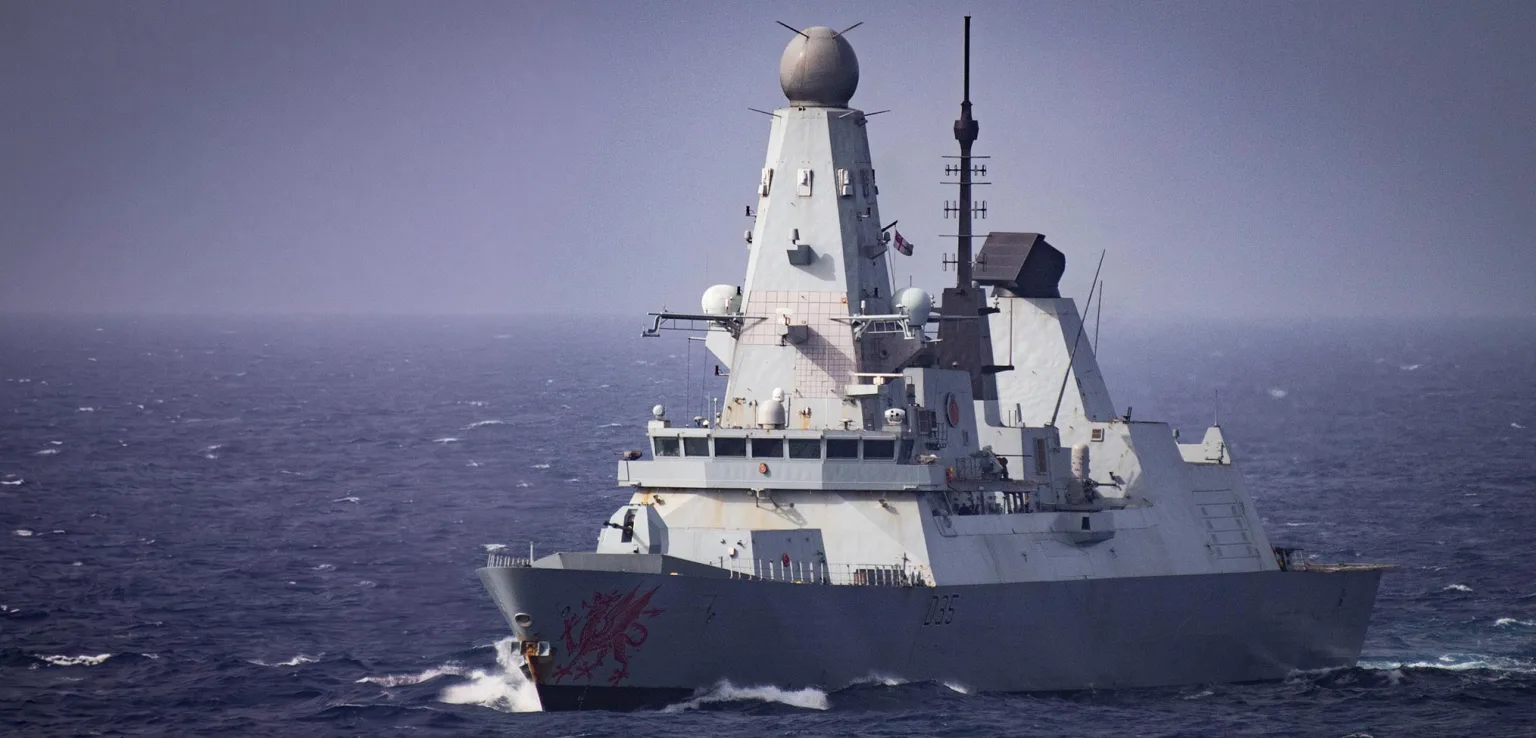
The UK and Gulf states have a long-standing security relationship. This puts the UK in an interesting geopolitical position as the Iran War passes the three-month mark. The UK does not want to be directly involved, despite Iran attacking Gulf allies and US pressure.
Britain has a lengthy history in the Persian Gulf region going back to the early 19th century, when it first established key relations and protectorates, including with the “Trucial States,” which would later become the United Arab Emirates in 1971.
Establishing protectorates in the Gulf was practical and convenient, as the Persian Gulf was an important trade route for Britain.
Needless to say, the Persian Gulf and the Strait of Hormuz remain a vital trade route. Over 20% of global maritime oil flows through the Gulf and the Hormuz chokepoint, while between 45% and 50% of China’s crude oil imports pass through the Strait.
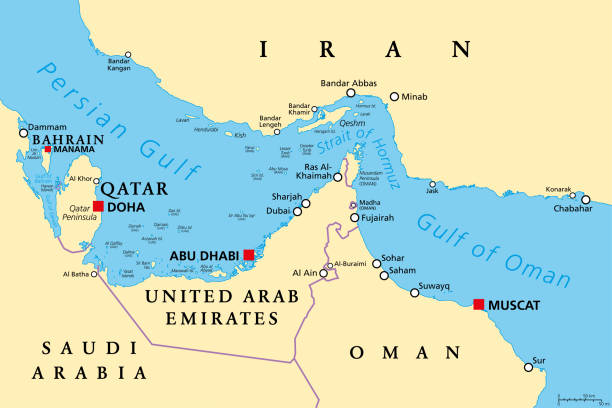
After the United States and Israel launched an attack on Iran on 28 February 2026, shipping passing through the Strait faced new and dangerous obstacles created by Iran.
As oil shipments were disrupted, US President Donald Trump asked NATO allies to help the American war effort, but the allies, including the UK, refused to become directly involved.
British Prime Minister Keir Starmer is instead trying to avoid being sucked into a wider conflict in the region by taking a defensive stance on the US-Iran War; a policy designed to defend its Gulf allies and interests on an as-needed basis rather than an offensive posture.
Starmer is putting what he sees as UK national interests first while supporting a negotiated settlement and de-escalation, but has also stated that Iran should abandon its weapons programs—the Iranian nuclear weapons program being one of the key reasons for the White House’s war on Iran.

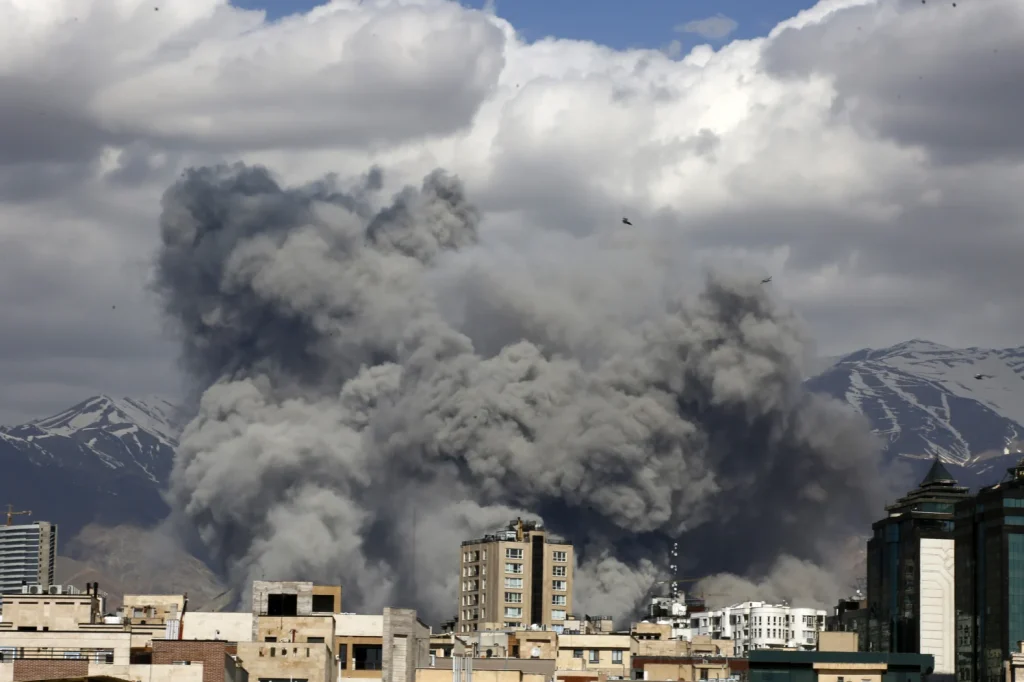
The US and Israel’s bombardment of Iran triggered a massive backlash from Iran, with the Islamic Revolutionary Guard Corps (IRGC) targeting the six-nation Gulf Cooperation Council (GCC) member states with missile and drone strikes, hoping to stir instability in the region.
A further provocation came from the Iranian proxy and Lebanon-based Hezbollah militia, launching a drone strike on the RAF base Akrotiri in Cyprus in March.
Starmer publicly condemned the Iranian attacks and demanded that Iran halt their air strikes on the Gulf states.
London’s position closely pairs with the GCC’s, which overall favours dodging a wider war while focusing on a diplomatic settlement. For years, GCC members have been building bridges with Iran, and, naturally, they are trying to prevent their countries from becoming combat zones.
Nonetheless, subsequent to Iran’s lashing out with air strikes on the GCC, London settled on something of a necessary compromise and decided to permit the US to use joint UK-US bases only for the purpose of destroying Iran’s ability to launch missiles and drones against GCC members.
But after a lull in hostilities since the Pakistan-mediated temporary ceasefire of April 8, tensions flared on June 3rd. The US struck Iran’s Qeshm Island, while Iran launched strikes on several Arab countries, including targeting US forces in Bahrain and Kuwait.
The GCC declared the Iranian attacks a “dangerous and unprecedented escalation”.
But while the GCC continues to show restraint, there is the risk of a GCC large-scale retaliatory response—what would be the UK’s position in such a scenario?
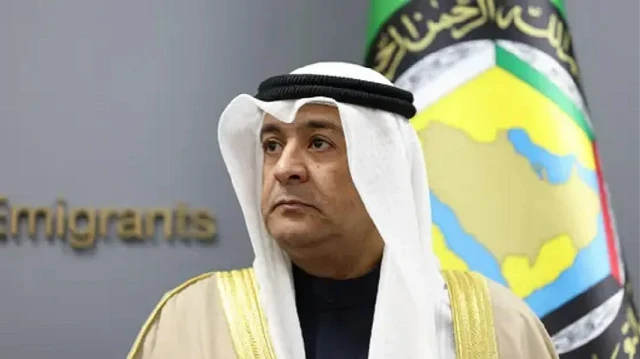
The GCC operates under the principle that “Gulf security is indivisible”: the sovereignty, stability, and security of any GCC member are linked to the entire partnership.
However, there is no true NATO-like military alliance within the GCC, and member states continue to rely heavily on armaments, defence cooperation, and security support from external partners, particularly Western countries such as the UK.
This reliance is in part reflected in the UK’s longstanding involvement in Gulf security initiatives. Before the current conflict, the UK had been participating in regional operations such as Operation KIPION (since 1980) and the International Maritime Security Construct (IMSC), a multinational naval coalition established after the 2019 Stena Impero incident.
By providing additional military support to the region through existing operations such as the IMSC, the UK can balance competing objectives: reducing domestic and Iranian perceptions of hostile intent toward Tehran, while avoiding direct involvement in US offensive actions against Iran and continuing to protect regional allies and maritime shipping.
London’s policy is to defend against the threat posed by Iranian missiles and drones, protect regional partners’ critical infrastructure, and maintain a multi-domain security posture to help deter a major escalation in the region.
This defensive support also includes coordinating with GCC air forces, integrating air defence, sharing intelligence, and maintaining rapid-response capabilities.
Earlier this year, the UK sent a variety of air defence systems to the region, including several counter-drone systems.
Qatar has received Royal Air Force (RAF) Typhoon jets and military personnel; Saudi Arabia has received air defence systems that include the Sky Sabre Medium-range air defence system; Bahrain received the Lightweight Multirole Launcher (LML) Short-range air defence system; Kuwait has received the Rapid Sentry, Counter-drone/SHORAD and the ORCUS Counter-UAS system.
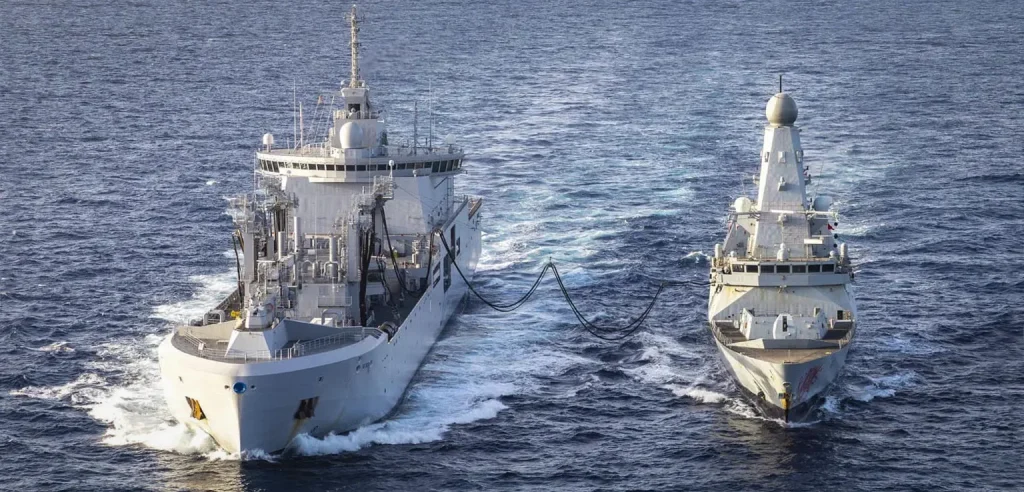
The Royal Navy’s (RN) destroyer HMS Dragon has joined the French Navy FS Charles de Gaulle carrier strike group in the Middle East and is pre-positioning in the Arabian Sea for a strictly independent defensive operation to safeguard shipping in the Strait of Hormuz.
The UK’s long history of military cooperation in the defence of Gulf allies and the protection of UK strategic interests in the region is unlikely to be broken in this crisis, but Starmer is walking a tightrope in US relations, diplomacy, domestic politics, economics, security and military risks.
Meanwhile, this strictly defensive military support posture, which provides comprehensive military assistance to its age-old friends in the region, does signal resolve to Iran.
But will the UK’s efforts genuinely deter a larger, more direct confrontation with Tehran and prevent the foreseeable—and unforeseen—consequences of escalation? Wars are unpredictable and risky, but perhaps only those in Tehran may ultimately know the answer.
–RdM
RDM Security & Defence: https://rdmsecurityanddefence.com/
✳️ UPDATE, 17 June, 2026
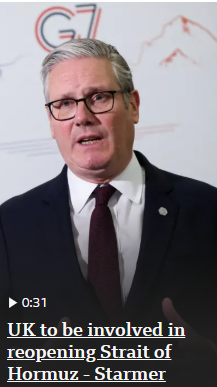
Latest from Starmer. UK to be involed in reopening Strait of Hormuz. See BBC News: https://www.bbc.com/news/videos/c3wy1w9pgdlo
✳️ 23 July 2026: Update: New UK Prime Minister Andy Burnham’s Policies on the US War on Iran:
AI Overview: New UK Prime Minister Andy Burnham (who took office on July 20, 2026) is continuing his predecessor’s policy of allowing the US military to use British bases for specific “defensive” strikes against Iran. However, he maintains a strict distance from joining the broader US-Israeli offensive. [1, 2]
Burnham’s specific stance and approach include:
- Base Usage: He has approved the continued use of strategic UK military facilities—such as RAF Fairford in the UK and Diego Garcia in the Indian Ocean—to support American forces. [1, 2]
- Limited Involvement: Similar to former PM Keir Starmer, Burnham classes these approved missions as defensive—focused on countering missile threats and protecting shipping lanes in the Strait of Hormuz. The UK has explicitly avoided deploying its own troops or participating in offensive actions. [1, 2, 3, 4]
- Navigating US Pressure: The UK’s restricted role has previously drawn public frustration from US President Donald Trump. However, following his transition into office, Burnham held a phone call with Trump, with both leaders publicly highlighting a commitment to securing the Strait of Hormuz and maintaining a strong military alliance. [1, 2, 3]
I don’t believe the UK is relevant any more in most places on the planet or where the Royal Empire once ruled. They have little to offer in today’s fast response, diplomatically and militarily, as well as economically. They live in the past and their influence is diminishing. A good example is the UK’s poor response to the drone attack on their Cypriot military base by the Iranians. Cyprus is in their backyard. Greece had to take the lead. Today, they couldn’t respond to any conflict Falkland Islands.
The last three months have shown who can and cannot help their friends and allies in the Persian Gulf. This conflict may have broken the chains that the UK had on the region and possibly beyond.
Interesting perspective.
Thanks for sharing.