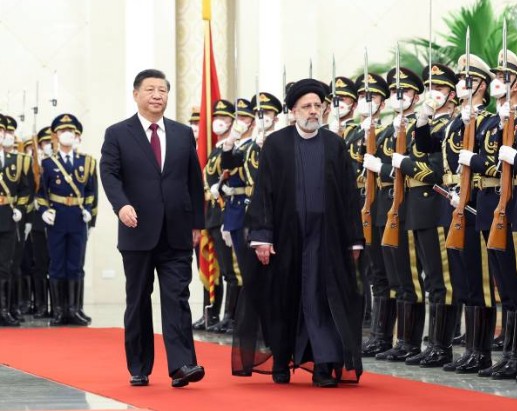
Over the decades, the relationship between China and Iran has evolved into a distinctive strategic interdependency, but the dominant theme is Iran’s growing dependence on China—an asymmetry which carries risks for Tehran.
China’s modern economic and strategic defence partnership with Iran began around 1970, before the Islamic Republic’s revolution, when Iran was ruled by the Shah Mohammad Reza Pahlavi and China by communist revolutionary leader Mao Zedong.
Because both countries viewed Russia as a security threat, Mao sought to build relations with Iran to counter the Soviet Union’s influence in the Middle East and Asia.
Today, the Iran War is putting great strain on Iran’s infrastructure, oil industry, economy, and military.
Reportedly, the US (and Israel) war on Iran has targeted and destroyed much of its defence-related production and military targets, destroying most—if not all—of Tehran’s conventional naval ships and aircraft. This leaves the country increasingly dependent on China, especially for components used in its domestic drone and missile production.
Although Russia and Iran cooperate on military-technical support (e.g. drones), China has become Iran’s most important lifeline. Russia is limited in its ability to aid Iran due to its own ongoing war with Ukraine, the drain on military resources, embargoes, etc.
North Korea used to supply Iran with weapon systems, technologies and military designs, but recent intelligence reports allege that North Korea has stopped supplying arms to Iran “in the hopes of being able to reopen diplomatic dialogue with the US”.
Going back, China’s defence trade with Iran really kicked off after the Iranian Islamic revolution in 1979, with China supplying tanks, anti-ship missiles such as the HY-2 Silkworm, and Chengdu F-7 fighters.
Beijing was one of Iran’s largest arms suppliers during the Iran-Iraq War (1980–1988).
Today’s sanctions on Iran have restricted China’s military hardware trade and aid to Tehran, but Beijing is managing to circumvent them.
Instead of supplying complete weapons and defence systems, China skirts sanctions by supplying components and parts, commonly referred to as “dual-use parts”.
Dual-use items are officially for civilian use but can be used in the manufacture of defence items. It’s an old trick of the trade because these components and parts are difficult to track once exported for their true purposes.
Examples of Chinese dual-use products include sodium perchlorate, a chemical used in fireworks and car airbags; drone engines; computer chips; and certain technologies.
China also supplies Iran with the BeiDou Navigation Satellite System (BDS), which can be used for enhanced, jam-resistant targeting, an important element in Iran’s offensive/counteroffensive air strikes.
It is reasonable to assume that BDS could possess mechanisms for intelligence collection and information access for Beijing to use, and Tehran is likely aware of this.
Iran should expect that some of the Chinese dual-use technologies imported will include embedded intelligence-gathering systems. Even allies spy on allies.
Back in the 1990s and 2000s, Chinese companies were encouraged to do business in Iran and invest there. As Beijing strengthened its economic ties with Iran, China became a major purchaser of Iranian oil.
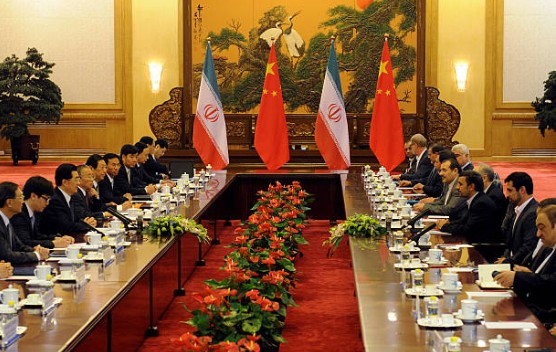
Despite long-standing US sanctions on Iranian oil, China has become Iran’s biggest crude customer through a “shadow fleet” of tankers and other methods to circumvent the embargo, accounting for up to 90% of Iran’s oil exports. Again, this leaves Iran extremely dependent on China.
In the meantime, China relies on Iran for a moderate 12% to 15% of its oil imports.
If Iran’s oil taps were cut off or destroyed, China could secure alternative sources, but it would feel a short-term pinch from the disruptions before those new supplies came online.
Consider that on July 8, US President Donald Trump stated that strikes on Iran’s oil infrastructure and seizing control of the crucial Kharg Island oil hub are not off the table.
After the failed ceasefire, Beijing’s primary interests are not altruistic toward Iran, but remain China first.
Beyond securing inexpensive crude oil, China’s support for Iran is part of a broader strategy to expand its influence in Iran and the Middle East while challenging U.S. regional influence.
Meanwhile, Iran’s economic (and military) dependence on China carries the risk that Beijing will influence Tehran’s policy options in the present and future, as China is likely to hold some sway over Tehran.
Worth noting is that the Chinese Communist Party (CCP) is ideologically at odds with Iran’s Shia Islamic theocracy, yet they have a partnership because both apply realpolitik, each pragmatically serves their own special strategic needs, interests and agendas.
Both countries are members of BRICS, an 11-member geopolitical and economic bloc that includes Russia, whose aims include countering US and Western-dominated institutions.
China’s regional influence is reflected in its role in helping Iran restore diplomatic relations with Saudi Arabia in 2023, leveraging its economic ties with both countries, with China being the Kingdom’s largest oil customer.
As an aside, the US war on Iran, Iranian airstrikes on Saudi Arabia and other GCC states, while the GCC are aware that Beijing continues to supply Tehran (with dual-use material), could negatively impact any future Chinese efforts to lead any diplomatic efforts involving the GCC.
Iran is a sanctioned, pariah state, not trusted by many Arab nations, designated a state sponsor of terrorism by most Western nations, is at war with the US (and Israel), and it has attacked its regional neighbours.
Yet, China remains the support and friend Iran requires.
The reality is that Iran depends far more on China than China depends on Iran, giving Beijing a unique strategic advantage with both Iran and the wider Middle East.
Beijing is advising Saudi Arabia, Oman, and, by extension, the GCC, that it can help de-escalate the conflict through its influence on Iran, even as it continues to facilitate Tehran’s military needs.
The GCC should recognize that Iran’s over-reliance on China is, in part, a scheme for Beijing to exert influence over the GCC’s own policy options.
Only time will reveal whether China’s regional manoeuvring and strategic engagement with Iran will ultimately advance its long-term interests.
–RdM
LinkedIn: https://www.linkedin.com/pulse/war-sanctions-china-iran-partnership-royce-de-melo-m6dhc
Also see: RDM SECURITY & DEFENCE