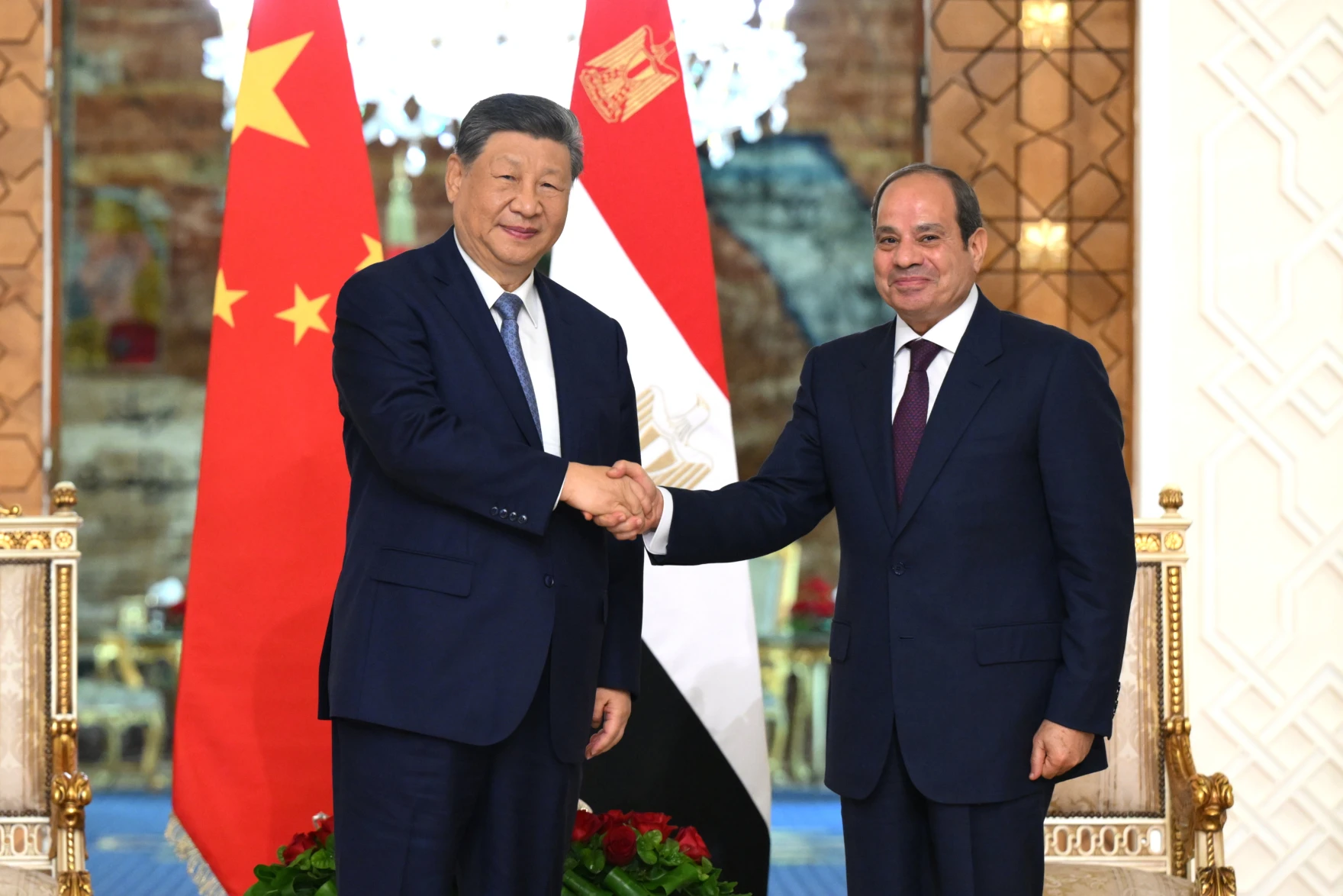
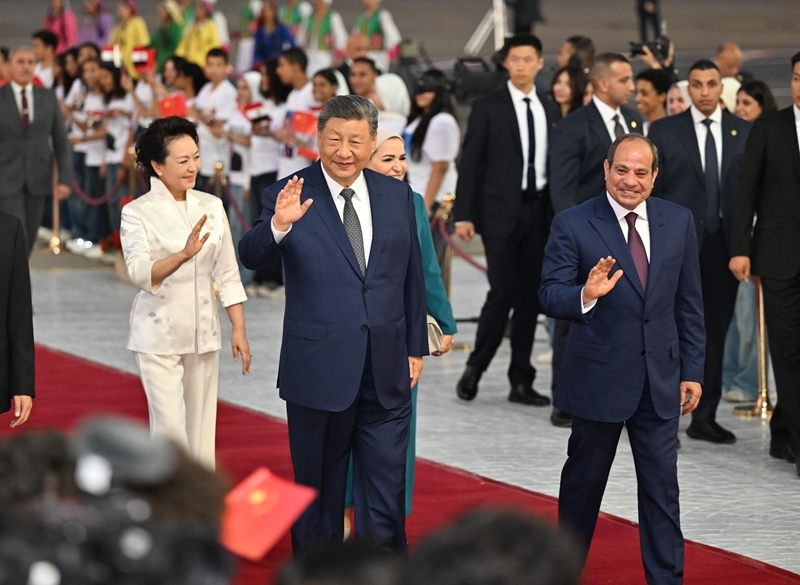
In early July last year, Sino-Egyptian relations leaped forward after Chinese Premier Li Qiang visited Cairo, fresh from the BRICS summit in Rio de Janeiro, Brazil. He met with Egyptian President Abdel Fattah El-Sisi and Prime Minister Mostafa Madbouly.
On September 1 to 2, 2026, Chinese President Xi Jinping visited Cairo for the first time in ten years to celebrate 70 years of diplomatic relations with Egypt.
Beijing’s long-time diplomatic efforts to expand and secure bilateral cooperation in trade, infrastructure, agriculture, and technology appear to have gained ground during Li Qiang’s visit.
Nonetheless, Cairo proceeds with caution.
China’s footprint in Africa, for example, has left many nations struggling, as Chinese entities strip raw materials (undercutting local manufacturing) and push unsustainable debt.
And Cairo is very aware that the People’s Republic of China (PRC) is supporting Iran during the present US-Iran conflict; that it is Iran’s biggest (sanctions-busting) oil customer; that the PRC are providing dual-use components for Iranian arms-making; and, simultaneously, trying to manipulate its influence with Arab and GCC nations, who are being attacked by Iranian-made air systems, by claiming it can leverage Iran.
Meanwhile, Beijing is competing with the US strategically and diplomatically, while the US is Egypt’s biggest military and economic aid provider.
Of course, China’s 2025 cooperation agreements with Cairo are largely meant to counterbalance U.S. influence in the region.
A policy of strategic autonomy means President Sisi’s government trusts no strategic “partner” wholeheartedly, including the US.
Allegedly, no military agreements were made during Li Qiang’s visit. Still, the visit came soon after the inaugural “Eagles of Civilization 2025” joint Egyptian and Chinese air force exercises of April–May 2025.
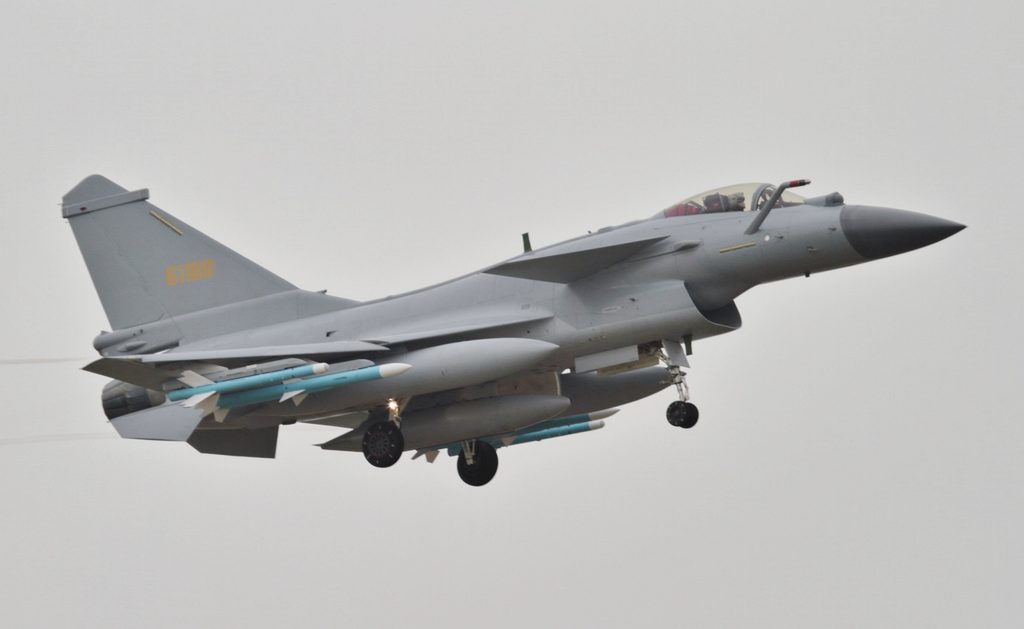
However, rumours suggest that after the joint air force exercises, Egypt’s Ministry of Defence procured several Chengdu J-10C “Vigorous Dragon” multirole combat aircraft.
Li Qiang’s visit led to diverse range of cooperation agreements, including a Memorandum of Understanding for the first joint development cooperation strategy spanning 2025–2029; financial and currency cooperation to boost local currency use (Yuan and Egyptian Pound) for transactions between the two (re: de-dollarization initiative); a debt-for-development swap framework program; several deals covering e-commerce, health, low-carbon development and manufacturing (including e-cars and more investment in the China-Egypt TEDA Suez Economic and Trade Cooperation Zone in the Suez Canal Economic Zone (SCZONE) (already worth billions in Chinese investments); reaffirming bilateral ties; and addressed Middle East stability in reference to the war in Gaza, and tensions with Iran at the time.
(In 2025 and to this day, both countries support a peaceful settlement with Iran.)
In 2014, China and Egypt initiated the China-Egypt Comprehensive Strategic Partnership to maintain bilateral ties on development and strategic cooperation between China’s Belt and Road Initiative and Egypt Vision 2030.
Notably, Egypt was the first Arab country to begin a strategic partnership with China in 1999.
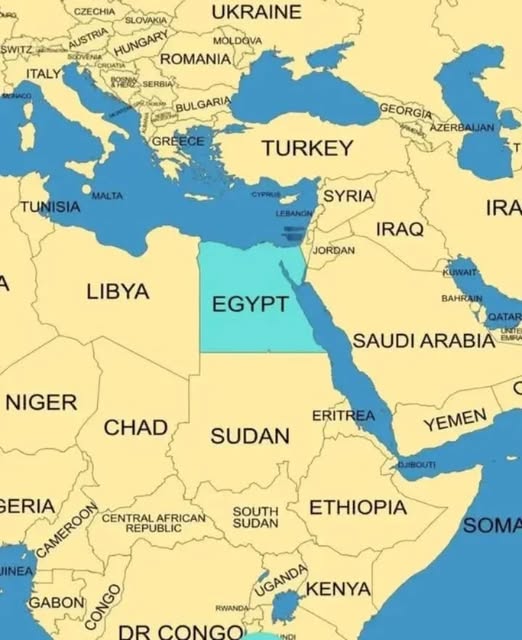
Egypt’s location in Asia, Africa, the Mediterranean, and the Red Sea; its ownership of the Suez Canal; its membership in the African Union; and its regional influence in Africa and the Arab and Islamic world (as a respected military power) all drive China’s geopolitical focus on Egypt.
Beijing expects Cairo, through its partnerships, to help protect China’s strategic interests.
China and Egypt ostensibly share an objective of multipolarity and solidarity with the “Global South”, a reference to “developing countries in Asia, Africa, and Latin America, which face economic, social, political, and climatic challenges,” of which Beijing sees itself as a leader.
This is reflected in the fact that both countries are members of BRICS, a group of emerging economies and developing countries that seeks to challenge Western and US-dominated sectors.
Egypt is taking advantage of China’s initiatives, but Cairo is programmed to apply counterbalances to its partners; it is hardwired not to depend on any one partner for military and economic support because of its autonomy-through-diversification policy.
Sources claim Egypt favours US military aid and equipment, which it feels are “superior and more in line with its training and military mentality.” Turning to China and other countries is based on necessity: in 2013, Washington temporarily cut off arms supplies to Sisi’s government after his military takeover.
In the meantime, reports say that Beijing has been working in areas of intelligence with Cairo related to certain matters and on select levels; some tied to Egypt’s armed forces’ organizational structuring, activities, much of it related to cooperation with China’s armed forces, the PLA; and also includes Africa (and Middle East) related security and diplomatic activities.
For example, in January, the Deputy Prime Minister and Minister of National Defence and Veterans Affairs of the Democratic Republic of Congo (DRC), Guy Kabombo Muadiamvita, met with Egyptian Defence Minister General Ashraf Salem Zaher and Armed Forces Chief of Staff Lieutenant General Ahmed Khalifa.
At the meeting, Kinshasa and Cairo agreed to expand their military partnership as the DRC faces growing security threats. ‘Both parties reaffirmed their commitment to a partnership grounded in state sovereignty, African solidarity, and long-term security stabilization…’
Beijing took a keen interest in the DRC-Egypt meeting; China has several investments and resource interests in the DRC (and throughout Africa).
As Cairo deepens its partnership with Beijing, Egypt’s strategic and military partnership with the DRC may, in turn, directly and indirectly help China’s interests in the country.
However, did China influence Egypt’s Muadiamvita meeting?
By the same token, with American PMCs operating in the DRC to protect mines—who ironically also protect Chinese-operated mines—and Washington and Kinshasa currently deepening their security and military cooperation, did the US also influence the Muadiamvita meeting in Cairo?
The PRC knows Cairo plays all partners for its own interests, not only China and the US, but other countries such as France and Turkey, both of which Egypt also has military cooperation agreements with.
An overriding commitment to strategic autonomy requires Egypt, as an Arab leader, to rely on no one and, in turn, diversify its political, economic, and military partnerships.
While Egypt is willing to open its doors to China where interests align, it remains careful to ensure Beijing never goes from partner to patron.
–RdM
LinkedIn: https://www.linkedin.com/pulse/sino-egyptian-cautious-partnership-royce-de-melo-v5wpc
Substack: https://roycedemelo.substack.com/p/the-sino-egyptian-cautious-partnership