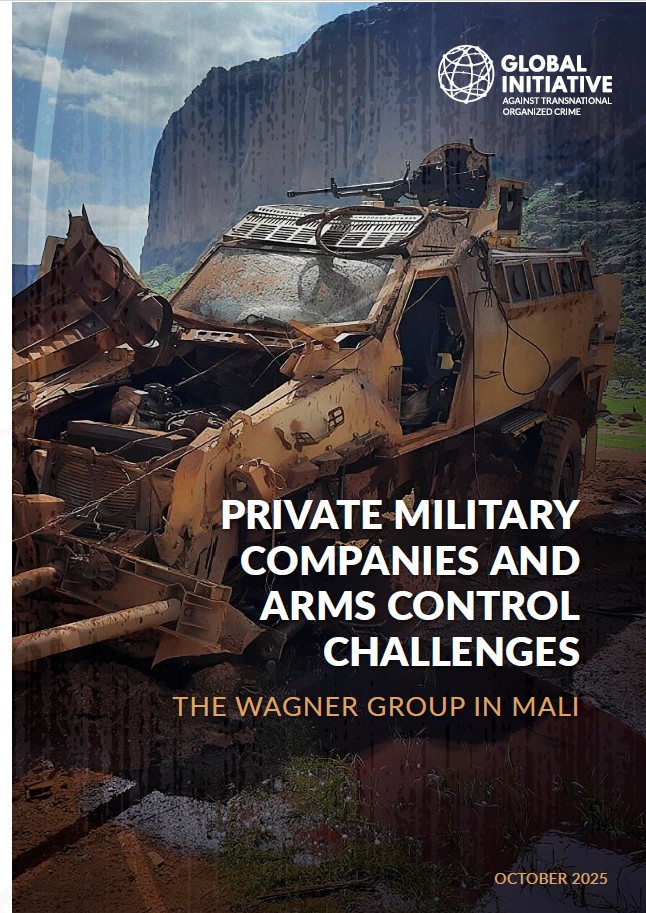
This is an interesting and very insightful report by Global Initiative called ‘Private military companies and arms control challenges, The Wagner group in Mali‘.
There is a bit in the report about Russians not getting along with the Malian troops are entirely in line with expectations.
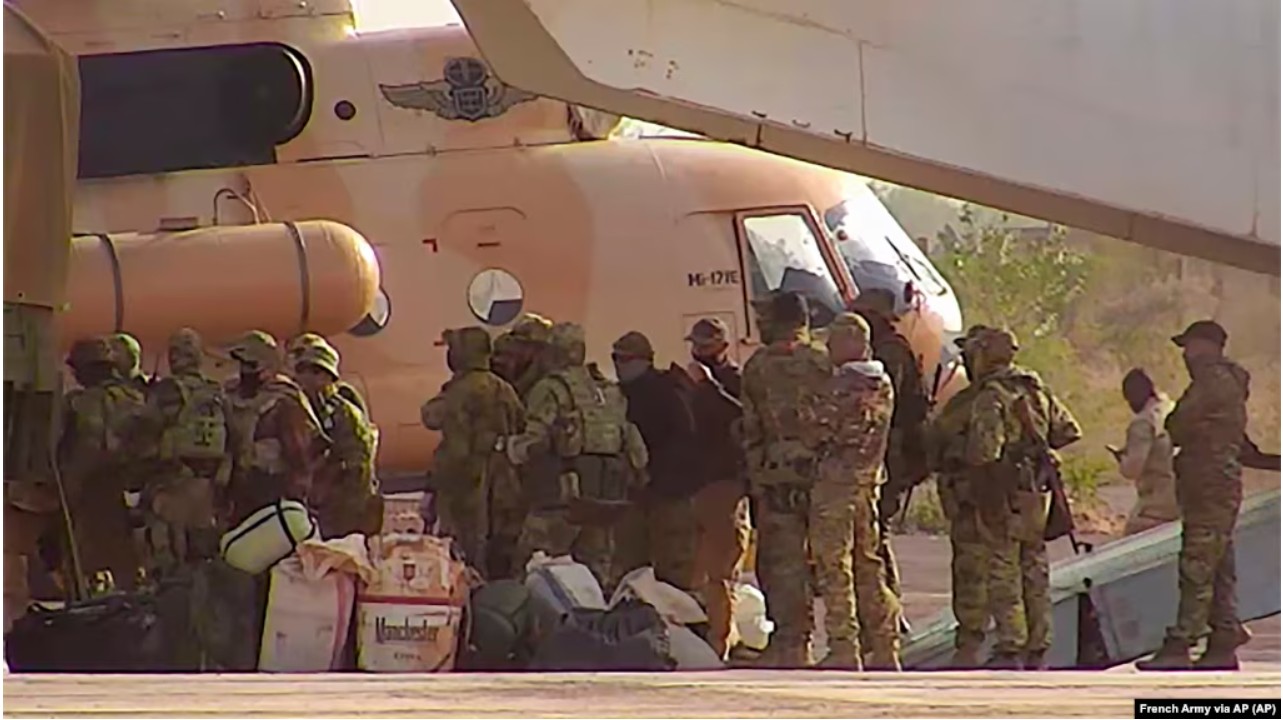
In Mozambique a few years ago, in the war against ISIS-Mozambique in Cabo Delgado, Wagner mercenaries, during their very short stint there, were racist towards the men of FADM and the locals. According to soures, the Mozambicans did not like the Russians. The PMC soon enough left the operation with their tails between their legs.
Regarding this paragraph from the report:
“According to arms trade experts consulted, the standard procedure for arms transfers would be for the end-user certificates for the equipment (which included armoured vehicles and heavy machine guns) to specify that it was for the sole use of the Malian government.54 Allowing for a third party, such as a PMC, to make use of these vehicles would be highly irregular. Therefore, it is highly probable that the instances documented in this paper of Wagner Group using FAMa equipment are examples of the ‘re-routing’ phenomenon identified by the UNWG.”
Highly irregular? Only because the context is somewhat rare.
Consider that the Wagner Group was contracted to the Malian government and was working for and serving the Malian government and its military, FAMA; therefore, the end user is still the Malian government. They are issuing arms to a fighting force/unit, i.e., the PMC, that is serving the Malian government and alongside FAMA.
Look at it this way: if a PMC in Africa working for a certain government in a conflict needs a controlled item or items, the procurement process for that item would or could have the end user as the country (and that MOD) they are working for and contracted to; the end user will not be the company. The entire procurement process would be through the government’s MOD, even if the controlled item(s) are set to be used by the PMC.
Also, Russia, which is sanctioned by many nations, doesn’t play by the rules anyway.
Whether Wagner got its arms from Russia directly or indirectly, or was given weapon systems by the Malian forces (which were supplied by Russia, China, or whoever), or if they captured weapons from enemy forces in Mali, is neither here nor there IMHO. It would be par for the course.
Ascribed Right to Physical Force
Someone who has extensive experience dealing with PMSCs, and knows a lot on the subject matter and the variables involved, wrote to me about the concept of state monopoly of violence, referencing:
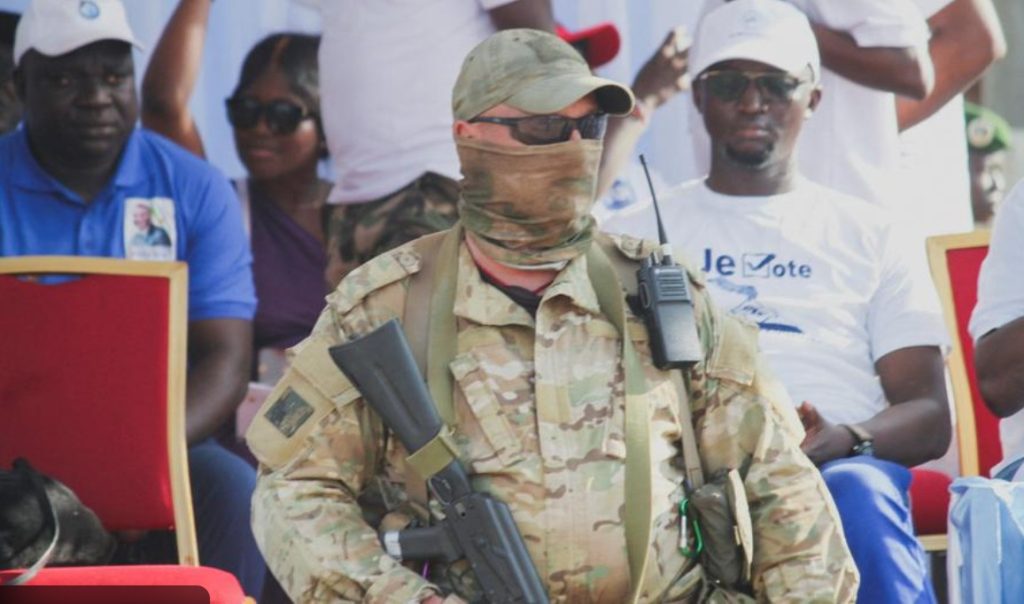
“”the right to use physical force is ascribed to other institutions or to individuals only to the extent to which the state permits it.” Therefore, if the PSC or PMC is authorized to use force by the State, then so long as that use of force is consistent with that authorization, and they are as accountable for misuse of force to an extent equivalent to similar State institutions, then the State monopoly of violence is not undermined.”
Wagner (and the Africa Corps today) (as a de facto extension of the Malian security forces) was authorized by the State, i.e., Mali, to use force. Therefore, if Wagner obtained weapon systems directly from Russia and/or through the Malian government and military, and/or by capturing enemy weapons, it’s par for the course and, again, it’s really neither here nor there.
Frankly, the Global Initiative analysts working on this report, kind of missed the mark on how the procurement processes, usage of arms, end user and arms sales/aid dynamics can work, and came to the wrong conclusions on this matter. I admit, it all can get a little complicted; it does go into the realm of legal definitions, interpretations and related frameworks. Again, it’s complicated. Nonetheless, the analysts should have been made more aware of the dynamics and the reality of context on how military/defence sales work in the contexts of UN regulations, national laws and regulations, the matter of end users, defence procurements (as it works generally and case specifically, e.g., Mali and Wagner), and the nuance of warfare, PMSCs (especially the complexities of Wagner Group-Russian government-Putin’s private army relations and Mali), and military forces naturally being resourceful during war, such as using captured arms from an enemy.
Overall the report provides some great insights and raises a lot of questions.
–RdM
As an aside:
◉ This end-user thing, at the end of the day, how does that apply to Russia making foreign military sales? Moscow makes its own decisions to whom it will sell or supply, and makes its own regulations and rules for the sale of arms and controlled goods to foreign countries, as well as to PMCs such as Wagner and the Africa Corps, or any other Russian PMCs in action. The Kremlin will sell to whom it wants, when it wants, on its own terms and conditions, whether we like it or not. And, unfortunately, there is not much we can do to stop that.
◉ I suspect that if Wagner was short on weapons and other supplies in Mali, in part, perhaps this had to do with Russia’s shortages and logistical issues during its war against Ukraine.
◉ And perhaps in post-Pregozhin-mutiny Russia, since Putin basically cut off Wagner, this too might have been a factor in supplies, at least for a short time. This, too, could have had the Kremlin telling the Malian government, “You supply Wagner what they need,” and/or led to Wagner becoming more resourceful.
◉ Also, maybe having Mali supply kits to Wagner personnel, while much of that equipment comes from Russia anyway, could simply be a practical way of doing things.
There are a few variables to consider.